The transition from academic coding to the high-stakes world of enterprise software development is often described by junior engineers as a “culture shock.” In a classroom, code is written to solve a specific, isolated problem. In a US enterprise environment—whether you are at a FAANG giant or a burgeoning Fintech firm—code is a living organism that must interact with legacy systems, meet strict security protocols, and scale to millions of users.
According to 2025 industry reports from the Computing Technology Industry Association (CompTIA), nearly 44% of tech leaders cite “technical debt” and “integration complexity” as the primary barriers to digital transformation. Navigating these hurdles requires more than just knowing syntax; it demands a deep understanding of architectural patterns, CI/CD pipelines, and collaborative debugging.
The Complexity Gap: Why Theory Often Fails in Practice
In the enterprise world, the “correct” solution isn’t always the most elegant one—it’s the one that is most maintainable. Developers often struggle with “Spaghetti Code” inherited from years of incremental updates. Unlike a student project that ends after a semester, enterprise codebases can span decades.
When faced with these massive architectural shifts, many upcoming developers realize that their foundational training didn’t cover the nuances of microservices or containerization. To bridge this gap, many turn to professional resources or seek programming assignment help to better understand the implementation of complex algorithms within scalable frameworks. This type of expert guidance ensures that the transition from a “working script” to “production-ready code” is seamless and follows industry-standard E-E-A-T (Experience, Expertise, Authoritativeness, and Trustworthiness) principles.
1. Managing Technical Debt and Legacy Systems
Technical debt is not inherently bad; it is an inevitable byproduct of rapid development. However, in the US corporate sector, the cost of maintaining legacy code can consume up to 60% of an IT department’s budget.
- The Challenge: Updating a legacy system without breaking dependencies.
- The Strategy: Implement a “Strangler Fig” pattern. Instead of a “rip and replace” approach, gradually replace specific functionalities with new services until the old system is eventually phased out.
- Data Point: A McKinsey study suggests that companies that actively manage technical debt see a 20% increase in developer productivity.
2. The Scalability Paradox
Writing code that works for 100 users is trivial; writing code for 100,000 concurrent users is an engineering feat. Enterprise environments in the US heavily rely on cloud providers like AWS, Azure, and Google Cloud to manage this load.
- Concurrency Issues: Race conditions and deadlocks become frequent as systems scale.
- Optimization: Focus on asynchronous processing and distributed caching (e.g., Redis).
- Resource Management: If you find yourself struggling to balance these high-level architectural requirements with your current workload, you might decide to hire an expert to make my assignment or project outline to ensure you aren’t missing critical performance benchmarks.
3. Security-First Development (DevSecOps)
With the rise of sophisticated cyberattacks, security is no longer a final check—it is integrated into every line of code. US enterprises are now adopting “Shift Left” security policies, where vulnerability scanning happens at the earliest stages of development.
- Common Hurdles: SQL injection, Cross-Site Scripting (XSS), and insecure API endpoints.
- The Solution: Use automated security testing tools and adhere strictly to the OWASP Top 10 guidelines.
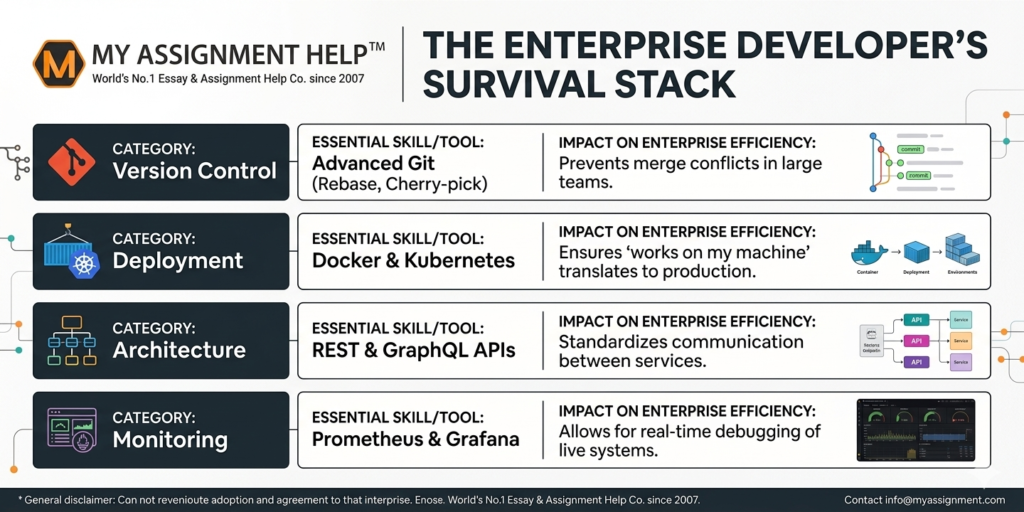
Key Takeaways for Navigating Enterprise Code
- Prioritize Readability: In an enterprise, you write code for your teammates, not just the compiler.
- Embrace Documentation: Use tools like Swagger for API documentation to ensure cross-team transparency.
- Automate Everything: From unit tests to deployment, automation reduces the “human error” margin significantly.
- Seek Mentorship: Don’t struggle in a silo. Use professional services and peer reviews to sharpen your logic.
Conclusion
Navigating advanced programming hurdles in an enterprise environment is a marathon, not a sprint. By focusing on architectural integrity, security, and scalability, you move from being a “coder” to a “software engineer.” Remember, the goal is to build systems that last, not just scripts that run.
See also: How Technology Is Redefining Attention Spans
Frequently Asked Questions (FAQ)
Q1: What is the biggest hurdle for new developers in US enterprise firms?
A: Understanding the scale. Most new hires are used to projects where the entire codebase is in one folder. Enterprises use distributed systems where a single button click might trigger five different microservices.
Q2: How can I improve my enterprise-level debugging skills?
A: Learn to use distributed tracing tools like Jaeger or New Relic. In a microservices environment, a bug might not be in your code, but in the way your service communicates with another.
Q3: Is technical debt always a negative thing?
A: No. “Intentional” technical debt allows a company to ship a product faster. The key is having a documented plan to “repay” that debt later through refactoring.
Author Bio
Alex Chen, Senior Technical Consultant
Alex Chen is a Senior Technical Strategist at MyAssignmentHelp. With over 12 years of experience in full-stack development and software architecture, Alex has consulted for several Fortune 500 tech firms in the US. He specializes in helping students and junior developers transition into professional roles by emphasizing E-E-A-T principles in technical writing and code implementation.
References
- CompTIA. (2025). State of the Tech Industry Report.
- McKinsey & Company. (2024). Demystifying Technical Debt.
- OWASP Foundation. (2026). Top 10 Web Application Security Risks.
- AWS Whitepapers. (2025). Architecting for the Cloud: Best Practices.
